

Realistic Listening, Built for the Consultation Room
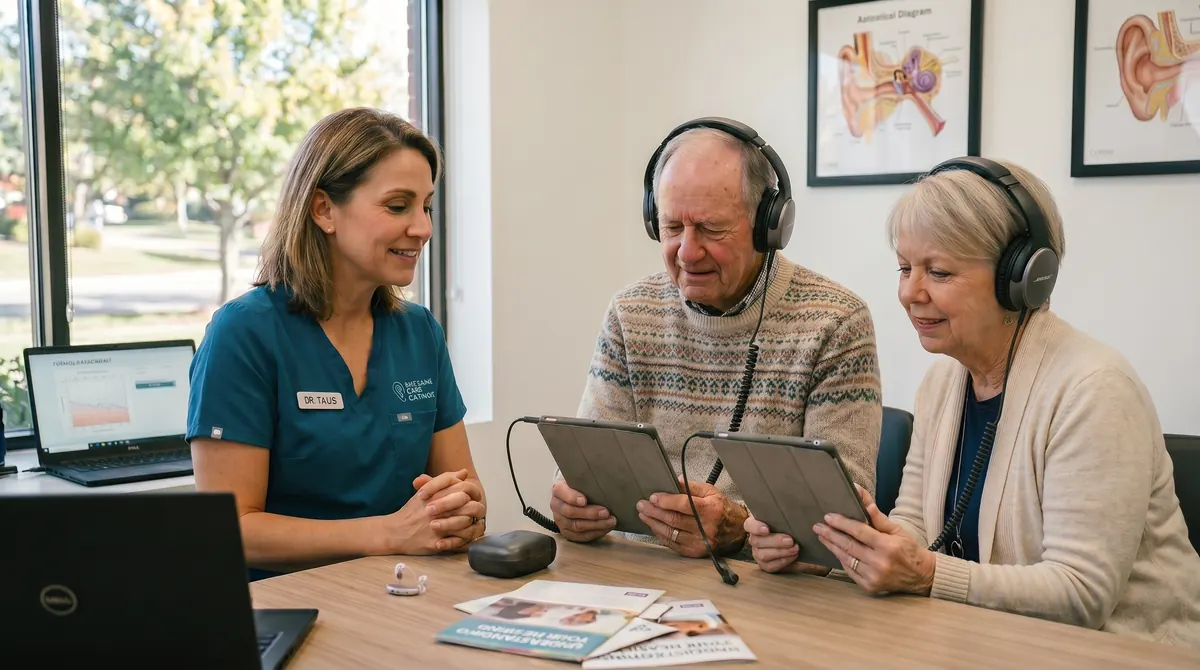
Hearscape Listening Experience gives audiologists a repeatable, three-to-seven-minute session personalized to each patient’s audiogram. Patients and companions step into realistic listening situations through a tablet and calibrated headphones before making a treatment decision.
Who it's for
Hearscape is designed for:
- Independent audiology practices
- Multi-location hearing care groups
- Newer hearing care professionals developing consultation skills
- Experienced clinicians seeking a more consistent demonstration
- Hearing aid manufacturers and enterprise partners
- Community screenings, health fairs, and outreach programs
The Product
A calibrated listening experience.
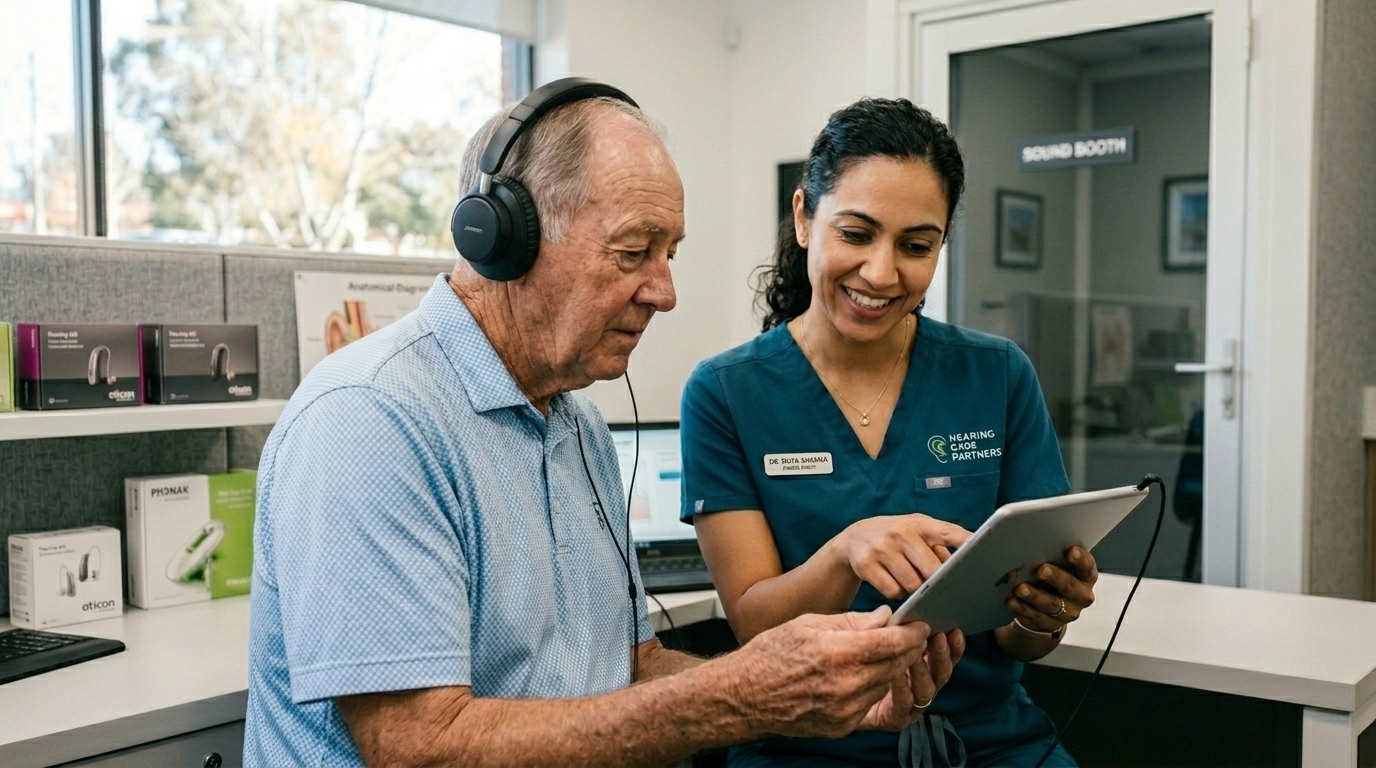
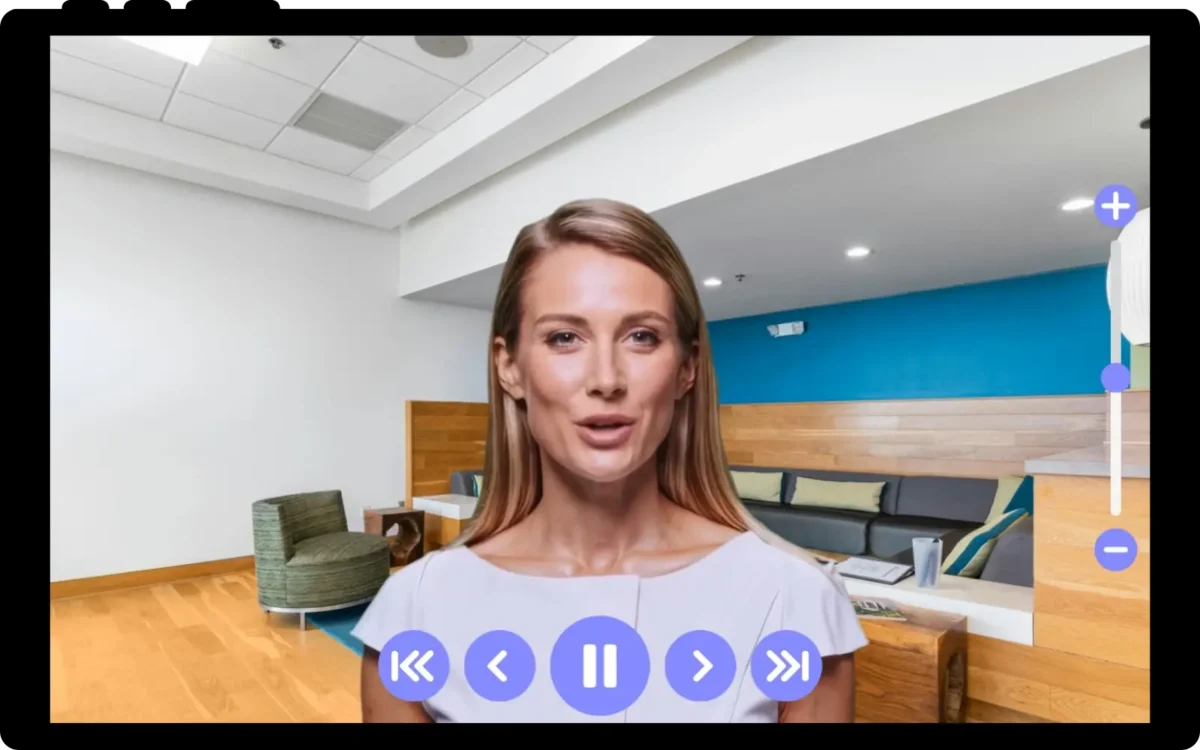
Unlike a traditional hearing aid demonstration, Hearscape does not require fitting a device to the patient's ear. The patient and companion listen through headphones to audio that was recorded through actual hearing aid technology in real environments: quiet rooms, outdoor spaces, noisy restaurants. That audio is personalized to the patient's specific hearing profile, so what they hear reflects how that technology would actually perform for their pattern of hearing loss in the acoustic environment of the scene. The companion also hears a simulation of the patient's loss, including in the Hearing Loss Simulation: a quiet 360° scene they hear first with their own hearing, then through the patient's hearing loss. The whole experience takes three to seven minutes.
Inside the app
What the clinician and patient actually see.
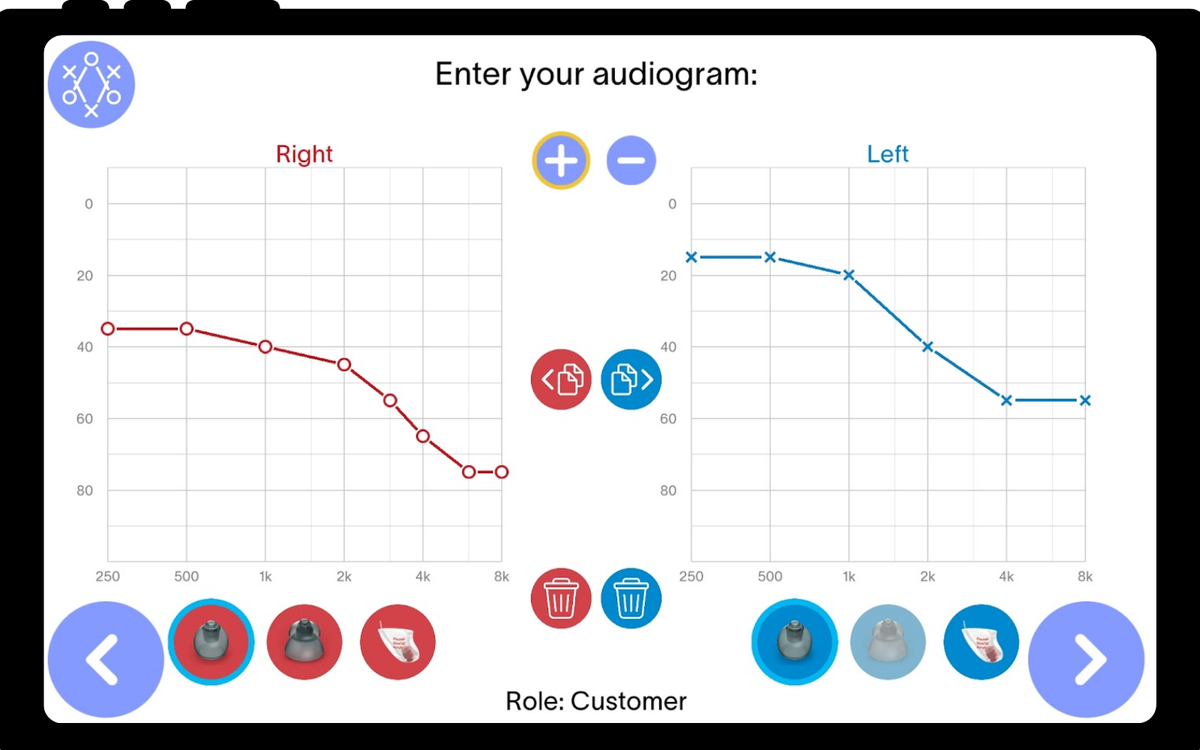
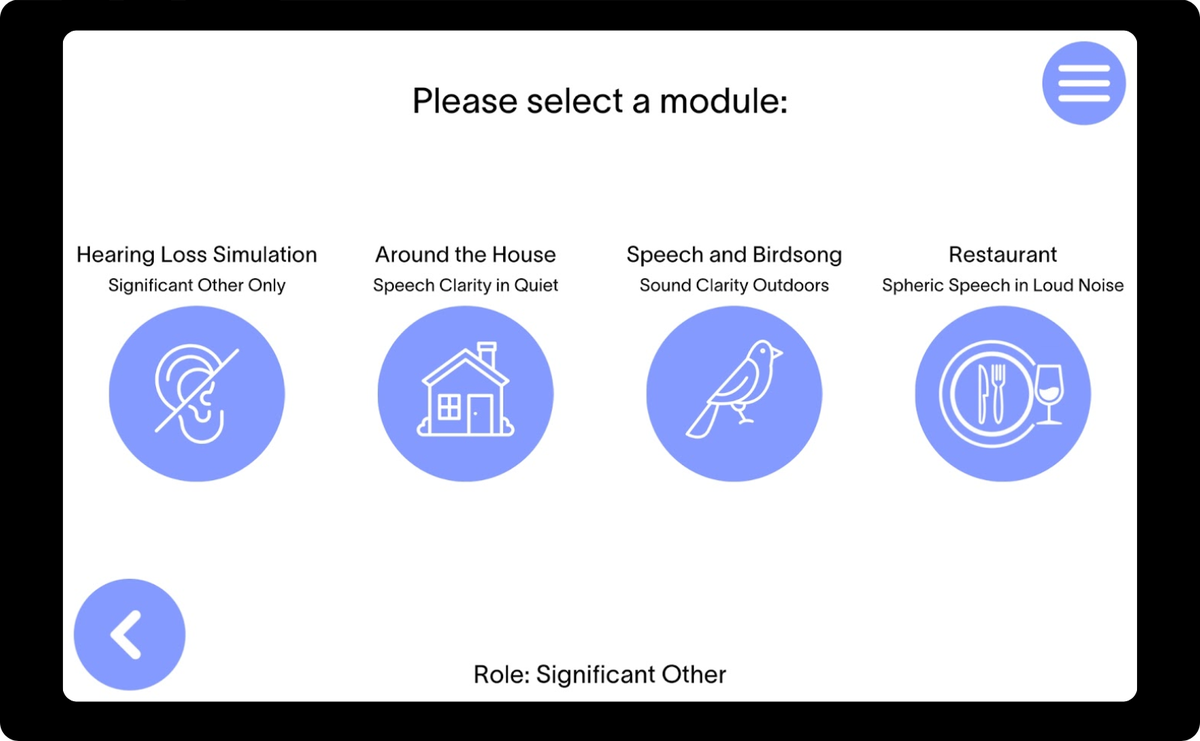
One tablet, two modes
Patient and Companion Modes
The patient hears a hearing aid personalized to their own loss. The companion hears a hearing loss simulation of the patient's loss, then they can listen to a hearing aid. This is a powerful experience within Hearscape, creating empathy and education while making the companion part of the decision-making process.
Choose an experience, then explore a scene.
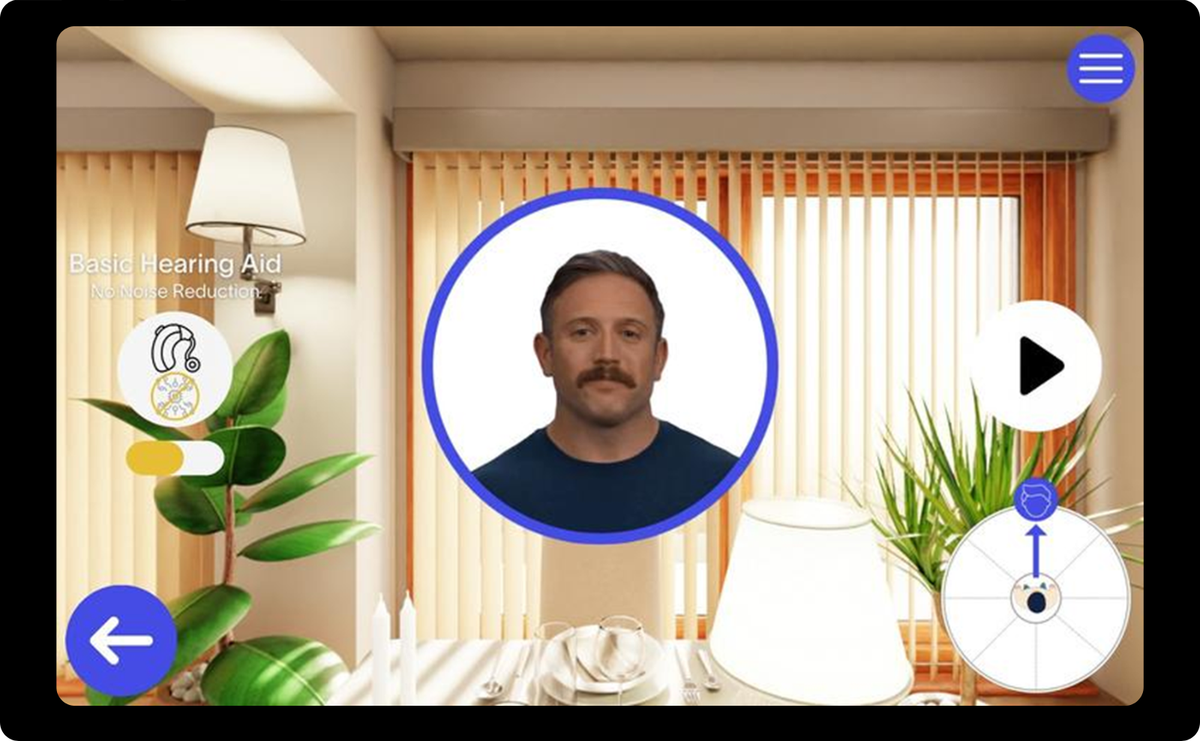
Scenes
 Patient · Demo Mode
Speech clarity in quiet
Conversation at home
Hear speech clearly in a familiar setting with everyday sounds around you.
Calibrated to the patient’s own audiogram. The patient listens to the conversation with their own hearing, then with a hearing aid, so they hear the difference between unaided and aided.


Two Experiences In One
Provider-Guided Experience
Demonstration tool designed for the consult room
- Three to seven minute listening experience
- At the point of decision (post audiogram)
- Lets the hearing aids demonstrate their own value
- Involves both the patient and their companion
Self-Guided Experience
Demonstration tool to use throughout the clinic
- Delivers a convincing demonstration
- Standalone, minimal staff required
- Ideal for the lobby or outreach events
- Used during the full assessment to give the HCP time back
- Four-tone hearing screener and NHANES audiogram estimator
- Hearing health check to generate qualified appointments
Clinical challenges this tool addresses
Replacing the explanation with an experience.
Patient ambivalence and objections
Patients underestimate the impact of their hearing loss and talk themselves out of treating it. "I need to think about it" is ambivalence, not a firm no. Empty statistics rarely resolve that. A first-hand experience does.
Low emotional buy-in
Patients can understand intellectually that treatment makes sense without feeling it. Hearscape, introduced alongside a conversation about what the patient actually cares about, creates a direct link between their stated priorities and what they just heard.
An underused companion
Companions have adapted to a loved one’s hearing loss for months or years without truly understanding it. The hearing loss simulator gives them that understanding in minutes, turning a passive observer into an active partner in the decision.
Live demos that backfire
Fit issues, feedback, and rushed demonstrations are outside a clinician’s control, and a demo gone wrong can undermine confidence in the technology and the clinician. Hearscape removes every one of those variables.
The clinical framework
Built on Motivational Interviewing, not persuasion.
Motivational Interviewing (MI) is a clinically validated, patient-centered communication approach that helps people explore and resolve their own ambivalence about change. Every Hearscape script, whether for a full consultation, a screening conversion, or an existing patient upgrade, is structured around it.
See the full training curriculum →Ask, don’t tell
Open-ended questions invite patients to articulate their own reasons for change.
Reflect, don’t react
Summarizing what a patient says back to them builds trust and clarity.
Evoke, don’t impose
The goal is to draw out intrinsic motivation, not create it from the outside.
Support autonomy
Patients who feel they’re choosing a path are far more likely to follow through.
What's included
One software license gets you two seats for your practice.
The $249/month license covers the Hearscape software licensing. Clinics provide their own tablets and headphones; see the hardware guide underneath for exactly what to buy. Founding Partners who commit by November 30, 2026 lock in $199/month for life and get their first hardware set free — see pricing for details.
- Hearscape software for the patient and companion.
- Guided experience mode: provider-led, step-by-step with A/B comparison
- Self-guided mode: standalone, no staff required, ideal for the lobby or outreach
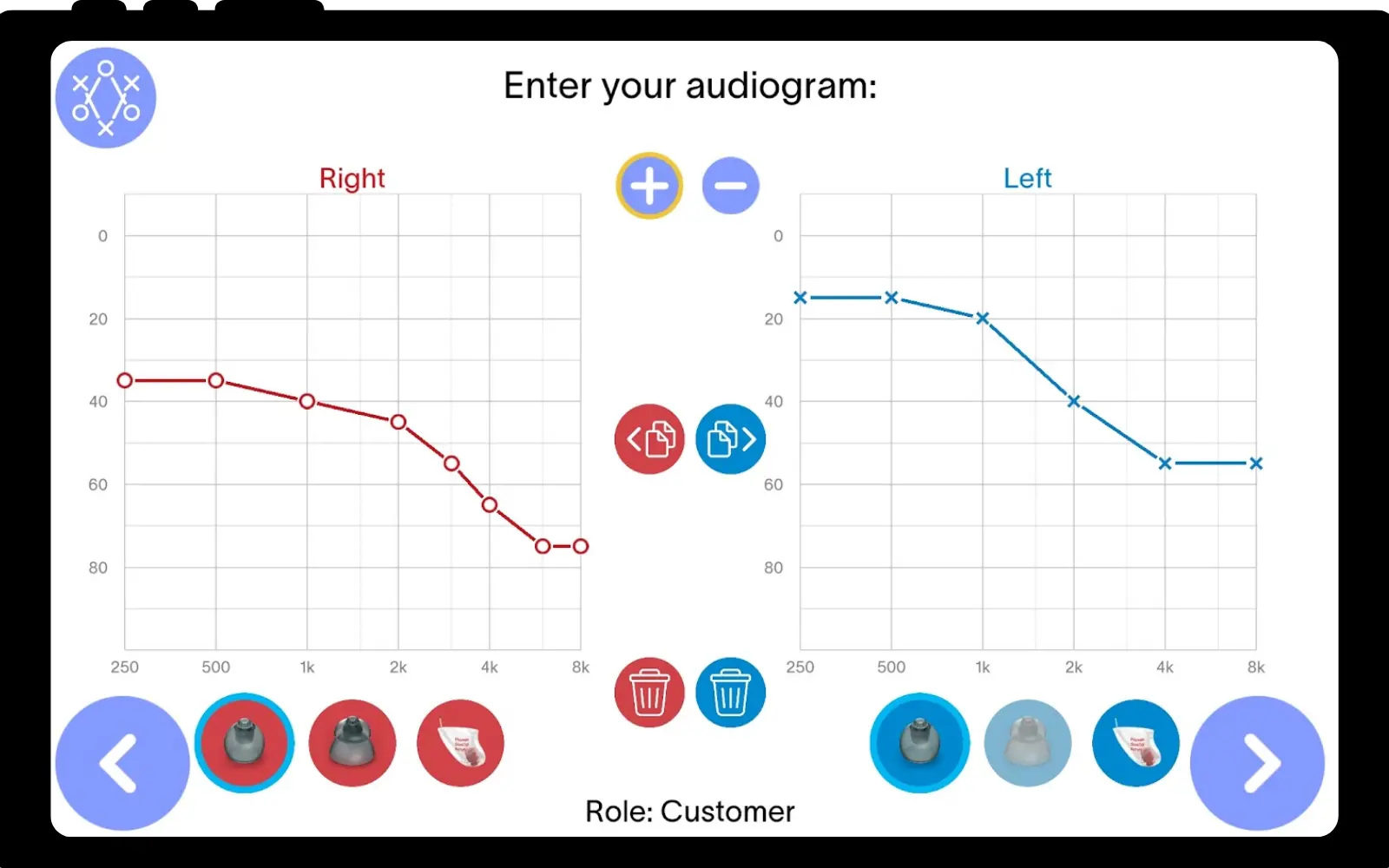
- Built-in hearing screener to estimate loss and personalize the experience
- Full clinical and staff onboarding, it takes less than an hour to become proficient
Hardware you'll need
~$350 total, one-time, per setRun the full companion experience with two sets: one for the patient, one for the significant other.
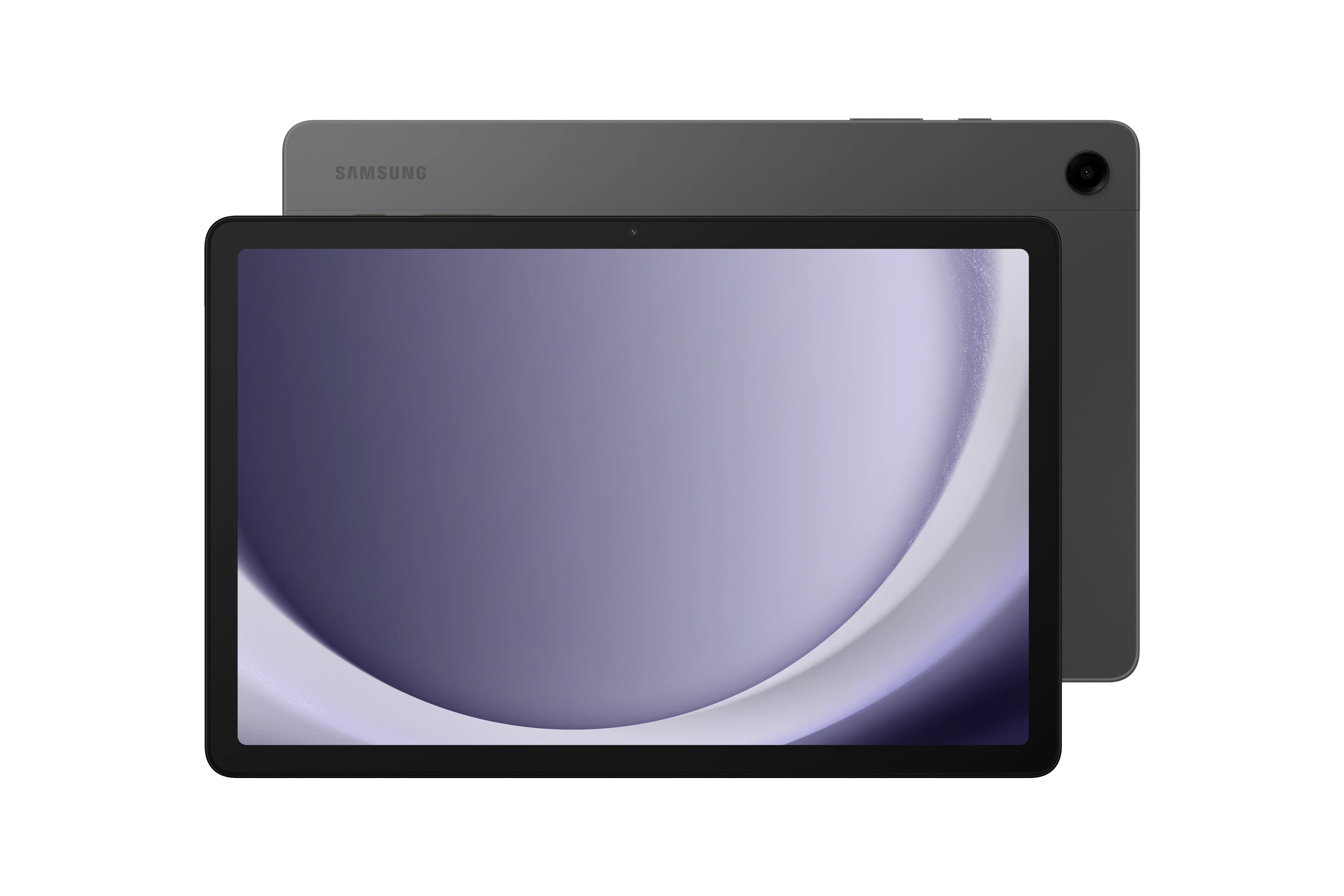
Tablet
Samsung Galaxy Tab 11+, with a case
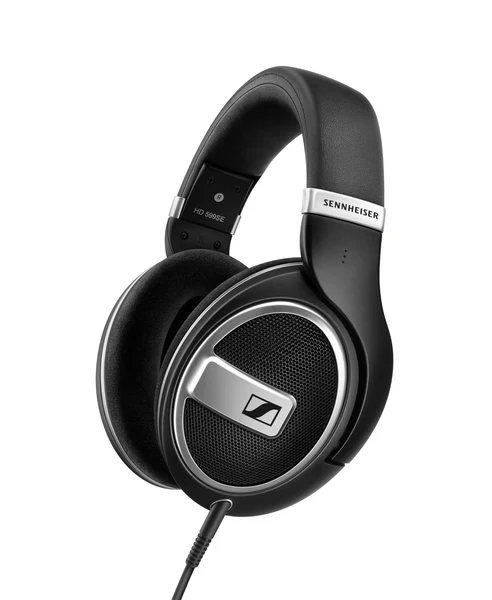
Headphones
Sennheiser HD599 SE, recommended for clinics: open-back, most comfortable, easiest for patient/HCP conversation. Sennheiser HD280 Pro is closed-back with better isolation for screening use. Bose QC Standard adds noise-cancelling for loud environments like health fairs and events.
How it works (implementation)
From sign-up to your first demo in days.
Hearscape integrates seamlessly into your workflow. No IT team. No disruption. Just a better patient experience — starting in days.
Online Training Guides
Step-by-step documentation for every aspect of the platform — when to use it, how to run it, clinical best practices.
Implementation Playbooks
Scripts and workflows for in-appointment demos, lobby pre-screening setups, and event deployments.
Webinars & Updates
Periodic group sessions covering new features, clinical application insights, and best practices from top clinics.
See the next webinar →FAQ
Questions clinics ask before saying yes.
No. The patient listens through headphones to audio recorded through real hearing aid technology in real environments. That audio is personalized to their specific hearing profile, so what they hear reflects how that technology would actually perform for their pattern of hearing loss, without the fit or feedback issues that can derail a live demo. The demo can also be presented through hearing aids that are set for no loss and act as “headphones.”
The core experience takes three to seven minutes. Most clinics add well under ten minutes to the total visit once discovery questions and post-demo reflection are included.
For standard subscribers, yes: the $249/month license covers the Hearscape software itself, and clinics provide their own tablets and headphones, which run about $350 total per set. To run the synced companion experience, most clinics set up two: a Samsung Galaxy Tab 11+ with a case, and headphones (Sennheiser HD599 SE recommended). See the hardware section below for the full breakdown. Founding Partners who commit by November 30, 2026 get their first hardware set free as part of the $199/month lifetime rate.
Yes. Self-guided mode lets a patient use Hearscape independently, which many clinics use in the lobby or waiting room to warm up patients before their appointment.
Yes. Hearscape is built on a proprietary audio rendering approach developed out of the University of Louisville that produces an accurate, personalized rendering of what a given hearing aid technology sounds like for a specific pattern of hearing loss.
Hearing aid demonstration software helps patients experience the potential benefits of hearing technology before making a treatment decision. Hearscape uses a tablet and calibrated headphones to present realistic listening situations personalized to the patient’s hearing loss. This gives audiologists a consistent way to explain hearing loss, demonstrate technology, and involve the patient’s companion.
The hearing care professional enters the patient’s audiogram into Hearscape. The software uses that hearing profile to personalize audio recorded through actual hearing aid technology in realistic listening environments. Patients hear the living room and outdoor scenes unaided and aided by switching the hearing aid off and on, and in the restaurant they hear the hearing aid’s noise reduction features switched off and on.
A core Hearscape session typically takes three to seven minutes. A clinician can incorporate it into a full hearing aid consultation, use a shorter experience during a screening, or allow patients to complete the self-guided experience while waiting for their appointment.
Yes. Hearscape can synchronize two tablets so the patient and companion participate at the same time. The patient hears the hearing aid processing while the companion can listen to a simulation of the patient’s hearing loss. This shared experience helps family members better understand the patient’s listening challenges and participate more meaningfully in the treatment conversation.
Hearscape can be used by clinics regardless of which hearing aid manufacturers they carry. The demonstration is designed to support the counseling and decision-making process without requiring a hearing aid to be fitted to the patient during the demonstration. Hearscape uses recordings made through actual hearing aid technology, but it should not be presented as a simulation of every individual hearing aid model unless that specific technology has been recorded and added to the platform.
Yes. Hearscape includes a self-guided experience that can be used before a full hearing assessment, including in a waiting room, at a community screening, or during an outreach event. A brief hearing screener or hearing-loss estimate can be used to create an introductory experience. This does not replace a comprehensive hearing evaluation. The most personalized Hearscape session uses the patient’s professionally measured audiogram.
Hearscape requires an approved Samsung Galaxy tablet, a protective tablet case, and supported calibrated headphones. Recommended options include the Sennheiser HD599 SE for comfort and communication, the Sennheiser HD280 Pro for greater sound isolation, and the Bose QuietComfort for noisier environments. The synchronized patient-and-companion experience requires two tablets and two sets of headphones. Immersive Hearing Technologies provides hardware guidance and remotely configures the software for each clinic.
Ready when you are
Get the listening experience in your practice.
We'll walk you through Hearscape on the visit types your clinic already uses.